Ideas to build your case before talking to anyone
Read on our blog how other teams solved it. At the end of this page you will find the tools and guides we are preparing.
Blog
What we see operating AI in real processes
Analysis for finance, procurement, HR and operations leaders.
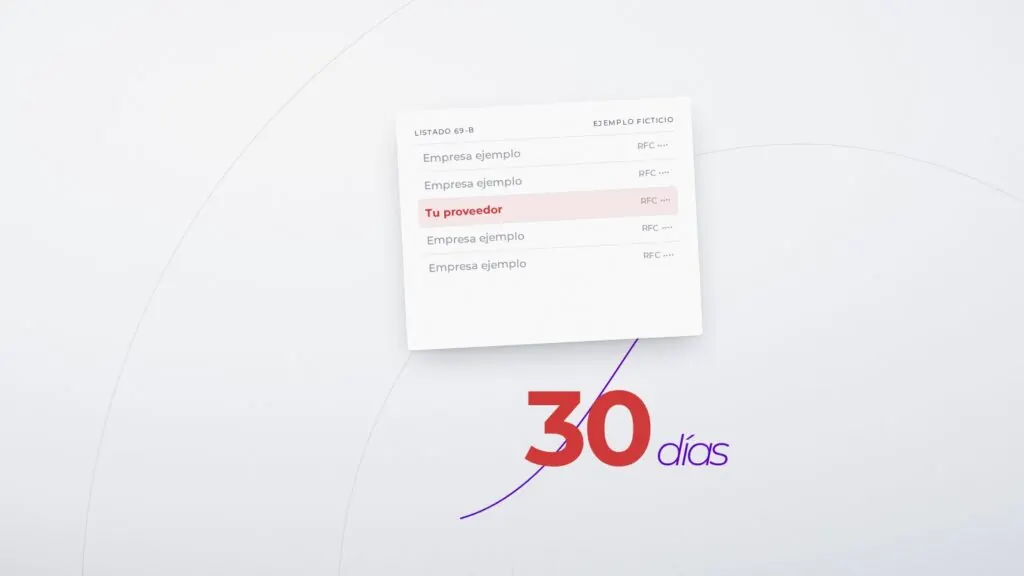 Tax · Mexico14 Oct 2026Your supplier appeared on a SAT list: what the law says about the first 30 daysThe 69-B list and invoices declared false under article 49 Bis: what deadlines the Federal Tax Code sets and what evidence is worth having ready.Read article →
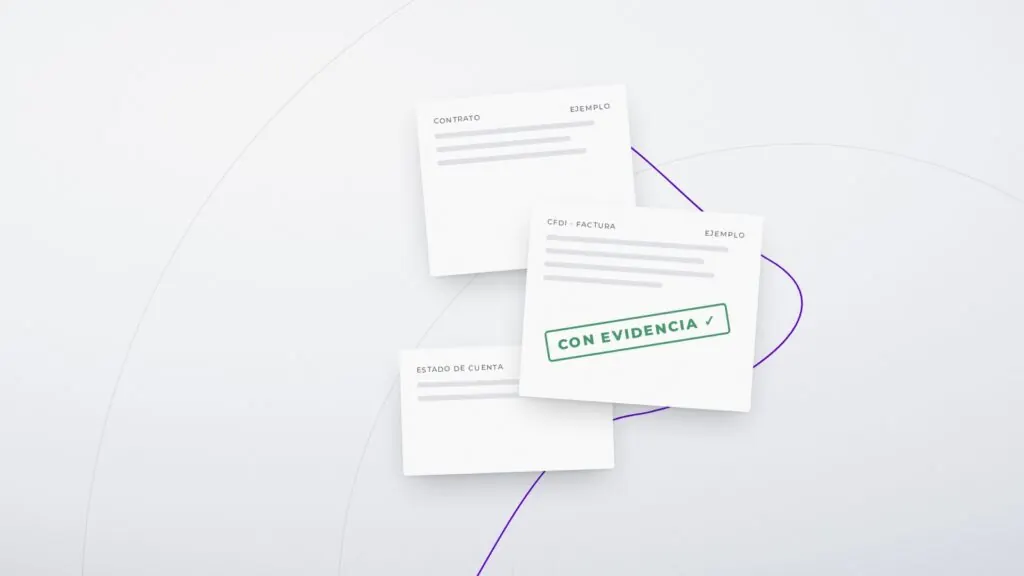 Tax · Mexico7 Oct 2026Materiality 2026: how to have the evidence for every purchase ready, from order to paymentWhat the 2026 CFF reform establishes on materiality, what evidence supports a purchase and how to tell whether your company could prove it in time.
 Strategy10 Aug 2026Technology-Agnostic Automation: How to Protect Your Back Office from Platform RiskWhat technology-agnostic automation should look like in practice, what platform lock-in costs a back office, and five questions to ask before you sign.
 Strategy27 Jul 2026The Back-Office Sweet Spot: How to Know If a Process Is Ready for AI AutomationVolume alone does not make a process a good automation candidate. Use this five-question self-check to see if your back-office process is ready for AI.
 Strategy20 Jul 2026Outcome as a Service: What It Means and How to Evaluate a ProviderWhat outcome as a service means in back-office automation, how it differs from buying a license or a bot, and five questions to evaluate any provider.
 Operations6 Jul 2026Why Shared Services Centers Are the Best Place to Start with AI AgentsShared services centers already have the volume, SOPs and metrics AI agents need. See where CSC automation stalls and the results of a live recruiting deployment.
 Operations24 Jun 2026From Requisition to Supplier in Hours, Not Days: What AI Changes in ProcurementAsk a procurement team how long it takes to process a purchase order, and you’ll get an answer measured in days. Ask them how much of that time involves actual work — validation, approval, supplier contact — and the answer is almost always: a fraction of it. The rest is waiting. Waiting for data to be entered. Waiting for the right approver to open their inbox. Waiting for an exception to get resolved. Waiting for someone to send the PO once it’s been approved. This gap — between the time a requisition arrives and the time a PO reaches the supplier — is one of the most consistent sources of operational drag in enterprise procurement. And it’s almost entirely invisible on a process diagram. Why PO cycles accumulate time without anyone noticing Purchase order processing doesn’t have one big bottleneck. It has many small ones, distributed across every handoff in the cycle: None of these steps are hard. But together, across dozens or hundreds of monthly requisitions, they add up to a process that takes days when it should take hours. The problem with how most organizations have tried to fix this The standard response to slow PO processing has been some combination of ERP upgrades, workflow tools, or rules-based RPA. These help — but they tend to solve only the straightforward cases. Rules-based automation works when inputs are clean and predictable. In practice, procurement inputs rarely are. Vendors change. Budget codes get updated mid-cycle. Requisitions arrive with missing fields. Approval hierarchies shift after a reorg. When any of these things happen, the automation breaks or routes to a manual queue — and the manual queue moves exactly as slowly as it did before. Organizations end up with a hybrid process that automates the easy 60–70% and leaves the rest to workarounds that are just as slow, and harder to track because they’re no longer in one place. The result is an automation that looks good on a dashboard and still frustrates the people who use it every day. What changes when you add AI to the cycle The difference between rules-based automation and an AI agent is not speed — it’s adaptability. An AI agent doesn’t just follow a script. It interprets context, validates data before it enters core systems, detects what’s missing or inconsistent, and handles variability without breaking. That means it can process the requisitions that don’t fit the clean path — which, in most procurement operations, is a significant share of total volume. Concretely, this changes the cycle in a few specific ways: The cumulative effect is not a dramatic transformation of the process. It’s the elimination of the accumulated waiting that existed at every handoff — which turns out to be most of the total cycle time. What this looks like in practice In a recent deployment at a manufacturing operation running hundreds of monthly requisitions, end-to-end PO processing time dropped by 2.5x after an AI agent was placed at the center of the procurement cycle. The improvement didn’t come from changing systems or restructuring teams. It came from eliminating the friction that had always existed but was never measured: the time between steps, not within them. The procurement team’s workload shifted. Less time entering and validating data. Less time chasing approvals. Less time building POs manually. More time on supplier relationships, spend analysis, and the cases that actually required human judgment. The harder question: where is your cycle actually losing time? Before investing in any automation solution, the most valuable thing a procurement or operations leader can do is map where time actually goes in the current cycle — not where the diagram says it should go, but where it actually accumulates in practice. In most organizations, the answer is not the steps themselves. It’s the handoffs between them: the moments when work is waiting for a person, a system response, or a resolved exception. Those handoffs are where AI agents create the most leverage — because they’re exactly the spaces that rules-based tools were never designed to manage. If your PO cycle is measured in days and you’re not sure why, that’s usually the place to start. Want to find out where your procurement cycle is losing time? Book a call with our team — we’ll walk through your process and identify where an AI agent can close the gap.
 Operations29 Jan 2026The Hidden Cost of Manual Exceptions in Manufacturing (And Why Automation ROI Is Underestimated)Most underestimate manufacturing automation ROI by ignoring the true cost of manual exceptions. Learn how human-monitored AI agents unlock efficiency.
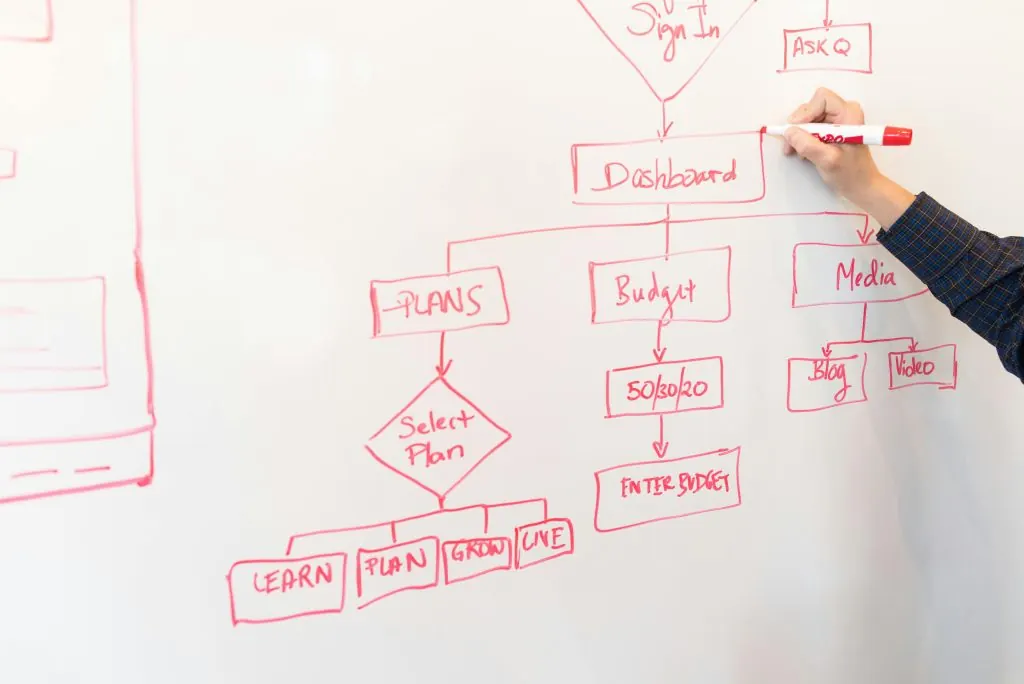 Operations29 Jan 2026Why “Straight-Through Processing” Is a MythStraight-through processing has been treated as the holy grail of enterprise operations. Yet, most enterprises discover STP breaks when faced with real operations.
 Strategy12 Jan 2026The Enterprise Automation Stack Is Getting Messier. Here’s How Leaders Should Think About It.Enterprise automation today is less about choosing the “right tool” and more about designing the right flow of intelligence.
No articles match your search. Try another word or topic.
Who we are
Engineers embedded in your operation.
We work from the inside: in your processes, on your systems and with your team, and we answer for what runs in production.
Automating business processes
Our engineers work with your team; design and build happen together.
Every project ends in something that runs every day, measured against your baseline.
We run what we build, with a service level.
Our story
Since 2014
What clients asked us
Help us understand why this process takes so long.
Founded as a process optimization and automation consultancy.
More than 200 specialists in a bilingual team serving clients across the Americas in English and Spanish.
- MXMexico
- USUnited States
- COColombia
What we work with
The platforms you already use
 UiPathAutomation AnywherePower Automate
 OpenAI
 Gemini
 SAPDynamics
 WhatsApp
Tools
Your numbers, and a one-page business case for your committee.
Seven questions, your level and the first step.
Guides
How to choose the process, measure the baseline and present the pilot.
With baseline, targets per wave and KPIs.
What you lose when a candidate waits, and how to measure it.